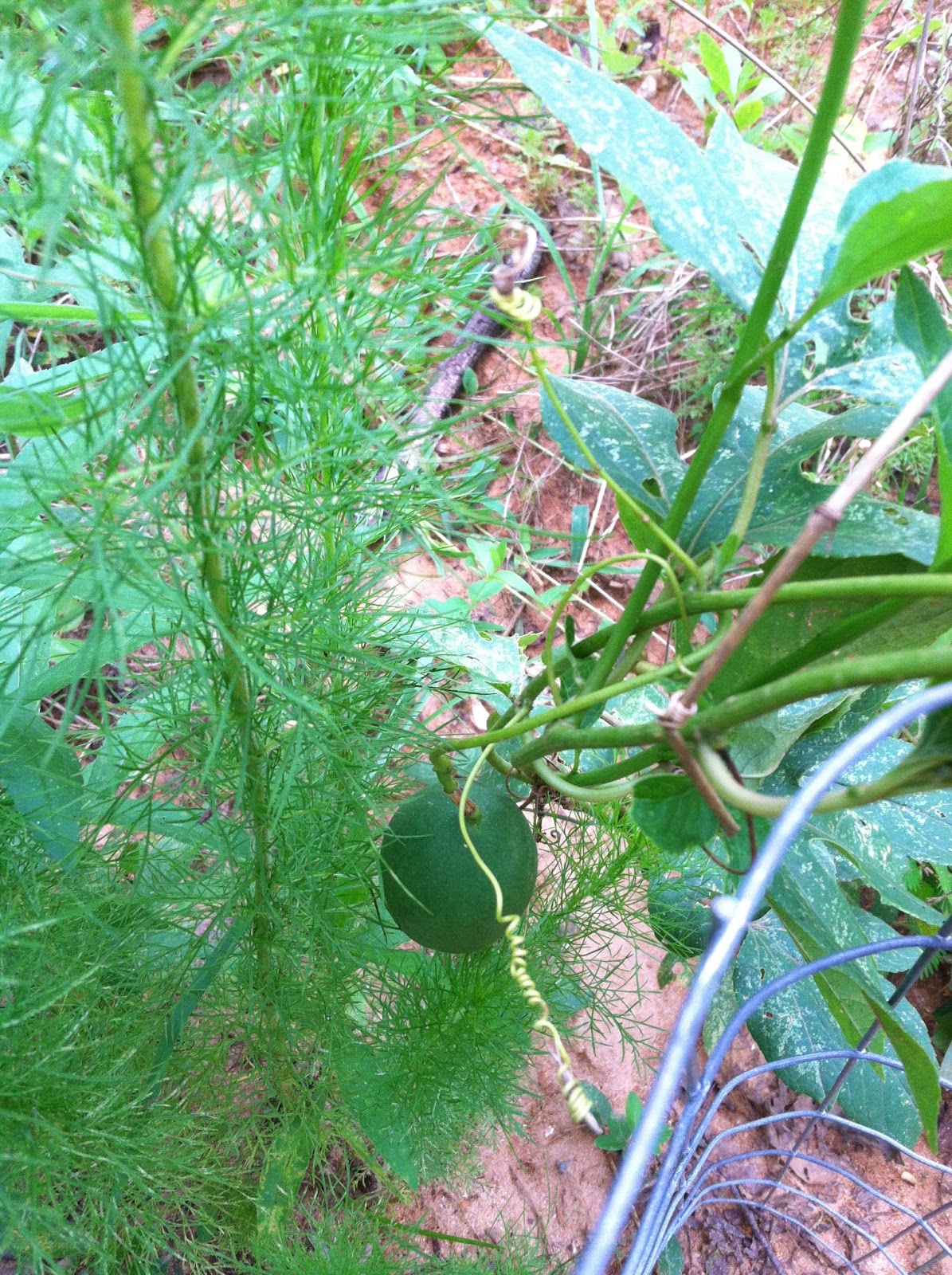
All parts of the plant are edible. The flowers make great additions to a salad. The leaves can be eaten raw or cooked (also a great addition to a salad). The fruits range in color from yellow to purple depending on the species of passion flower but can be eaten raw, juiced, or just about anyway you can come up with. All parts of the fruit are edible so you can eat the peel all the way through the seed packed inner core.
The plants require large bees to pollinate. Wooden beams staked up near the plants are great way to attract native carpenter bees to pollinate the plant.
You can make a tea (hot tea or iced tea) from the leaves which is supposed to be good for epilepsy, hysteria, insomnia, and even pain relief. You can also dry the leaves and smoke them (but tea or salad is probably a healthier way to ingest them). The plant has been shown to have beneficial effects for treating anxiety disorder. It also has sedative effects.
As with any plant, only consume in moderation (the plant has been shown to cause hallucinogenic effects if taken in large quantities) and contains a form of cyanide if taken in large enough quantities.
Below are some pictures of a Passiflora Incarnata commonly referred to as a Maypop or Purple Passionflower. And yes, the fruits are quite tasty.